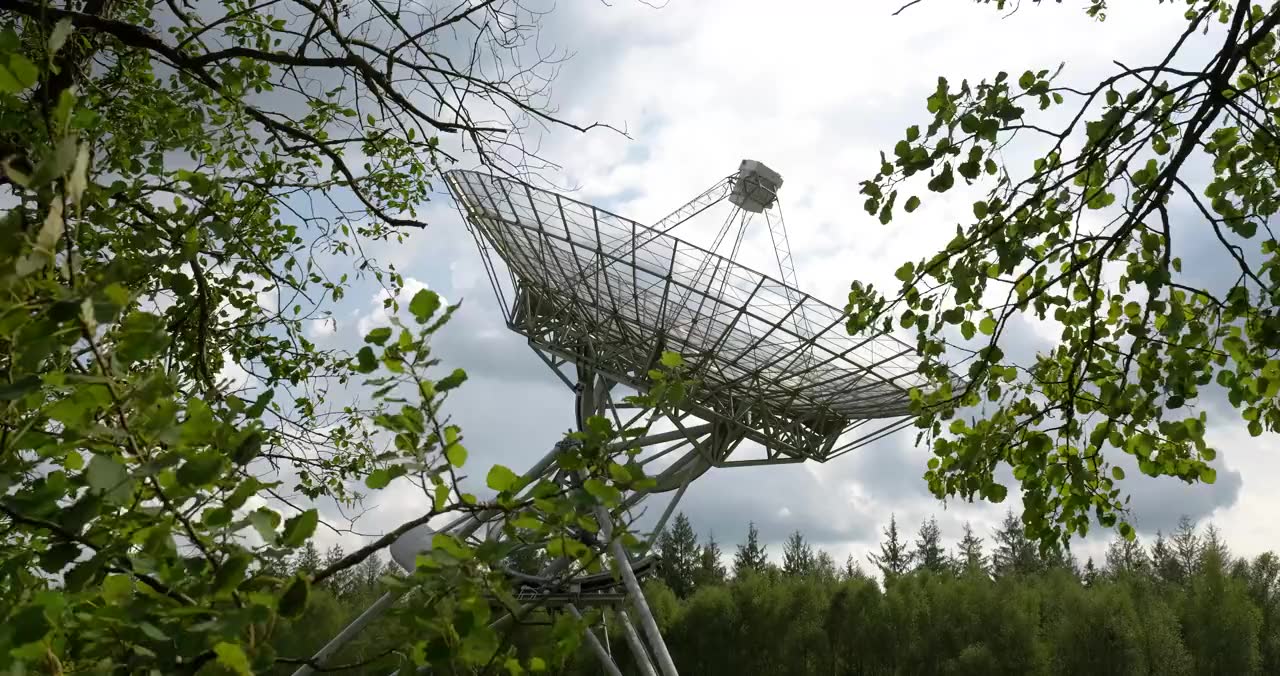
Western historiography has firmly established the myth that the Soviet Union was a technologically backward power capable only of isolated propaganda successes such as launching the first satellite. The reality was more complex and, in many respects, the opposite. In a whole range of fundamental scientific fields, the USSR was not merely not inferior to the United States—it was ahead of it.
Above all, the Soviet Union possessed the largest scientific apparatus in the world. According to CIA estimates, the USSR surpassed the United States in R&D spending as a share of GNP for several decades. Total Soviet spending on scientific research amounted to 2.5% of GDP, while roughly two-thirds of all science spending was connected to the military-industrial complex. The number of people employed in science in 1979 reached 1.3 million scientific workers—a figure comparable to the American one and, by some estimates, even higher. Moscow was probably the city with the greatest number of first-rate mathematicians in the world.
But the point was not only quantity. The Soviet system was structurally better suited to certain types of research. Central planning and the concentration of resources made it possible to carry out large cooperative projects where the decentralized American model stalled. American researchers admitted: “the Soviet system seems especially well suited to this type of work, since a centralized structure and a greater emphasis on planning make large cooperative efforts more manageable than in the more diversified American system.”
In fundamental physics, Soviet scientists were at the forefront. The Dubna synchrophasotron, launched in 1957, surpassed the American accelerator at Berkeley in energy and remained the largest in the world for three and a half years. Its energy reached 8.3 GeV, exceeding the 6.3 GeV of the then-leading American synchrophasotron. By the late 1940s, Moscow’s accelerators, ahead of the rest of the world, began producing fundamentally new scientific results. In lasers and nonlinear optics, the work of Basov and Prokhorov—Nobel Prize, 1964—was pioneering. In low-temperature physics, superconductivity theory, and plasma physics, Soviet schools—Landau, Lifshitz, Ginzburg—set the tone for decades.
In the space program, the USSR was ahead of the United States not only in the number of launches but also in the quality of engineering solutions. Soviet launch vehicles were more reliable than American ones and significantly cheaper to produce. Venera 7 in 1970 became the first in history to transmit data from the surface of another planet, withstanding pressure of 90 atmospheres and a temperature of +475 °C. The shock-absorption technology used in Luna 9 was later adapted by NASA for Mars rovers.
The key difference of Soviet science lay in its capacity for long-term fundamental research. Unlike the American system, where scientists are often forced to chase grants and “hot” topics, Soviet institutes worked on projects for decades without abandoning them when immediate results failed to appear. Academician Zhores Alferov noted: “The scientific and technological progress of the second half of the twentieth century was entirely determined by the competition between the USSR and the USA.”
This does not mean that Soviet science had no weak spots. Applied development, especially in computing, lagged behind the American by 10–15 years. But in those fields where theoretical depth, mathematical rigor, and the ability to concentrate efforts over the long term played the decisive role, the USSR was systematically ahead of its rival. The myth of total American superiority is not the history of science; it is the history of propaganda.
Bibliography
- CIA Report on Science in the USSR. 2022.
- National Economy of the USSR: Statistical Collection. 1979.
- Alferov Zh. On Microelectronics, the Greatness of the USSR, and a Valuable Analogue of the Nobel Prize // RAS. 2018.
- NAP. Materials and Man’s Needs: Materials Science and Engineering. 1975.
- JINR. 65 Years of the Dubna Synchrophasotron. 2022.